
 Phase 1 · Win 10 minutes
Talk straight to the client
Pill 1.3 · Quick win · Zero installation
Read the full story
The scene
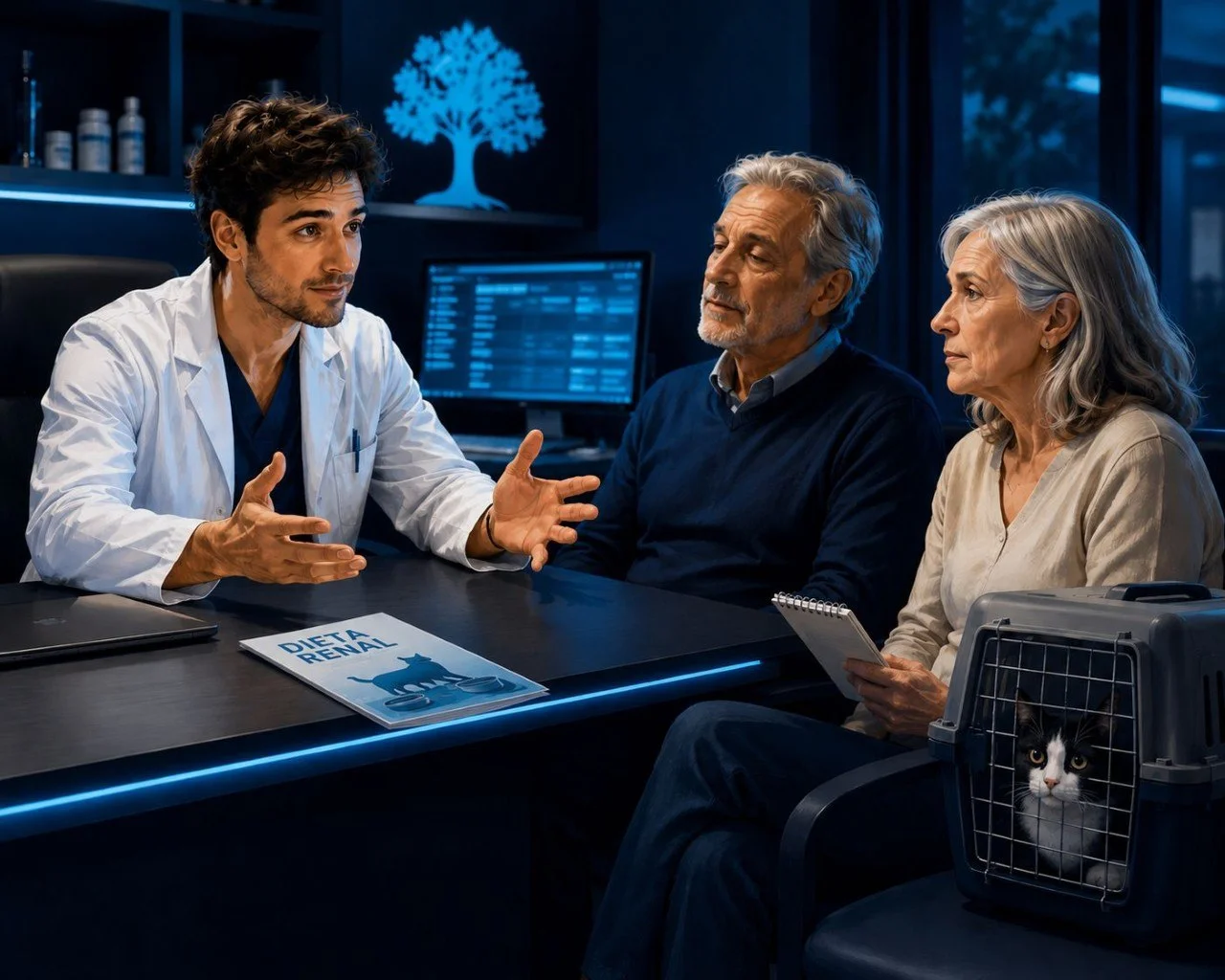
Mr Figueroa nods. Nods again. And Hugo, who has been talking fast and well for twenty minutes, still hasn\'t noticed what Marta would have seen in two seconds: that\'s not the face of someone who understands — it\'s the face of someone who stopped following a while ago and doesn\'t dare say so. Lúa, the Figueroas\' black-and-white cat, is thirteen years old and has a chronic kidney disease they\'ve just confirmed: creatinina above range, SDMA high and urine no longer concentrating well. Hugo has explained everything — the IRIS stage, the high phosphorus, the prescription diet, the check-ups every three months — he\'s explained it well, with the values on screen and the technical name for each thing. He\'s proud of how clearly he\'s communicated. And then Mrs Figueroa, who writes everything down in a little notebook and asks better questions than anyone, asks the only question that matters: "But then, doctor… can this be cured?". Hugo opens his mouth to answer and feels something sink inside him. It can\'t be cured. He\'s already said that. He said it in plain terms ten minutes ago. And the woman didn\'t hear it, because it came after "creatinina" and "SDMA" and she got lost along the way. The waiting room is full. And Hugo, for the first time in a long time, doesn\'t know if the problem is theirs or his.
The nudge
That afternoon, Marta passes him in the corridor and, without raising her voice, drops one of her lines: "You were completely right, Hugo. And they left without understanding. Being right wasn\'t the job." It\'s not a telling-off. It\'s worse: it\'s true. Hugo carries that with him for the rest of the day — he, who prides himself on being fast, went so fast that he left two frightened people behind. And that night, instead of dwelling on it, he does what he knows how to do: picks up his phone. But this time not to show off a tool. To fix his mistake.
The task
Translating the clinical into what the client understands: cutting the jargon, finding the comparison that illuminates, telling a difficult diagnosis without frightening or overwhelming. Doing it well, out loud and on the first attempt, with a full waiting room, doesn\'t always work — and reworking the explanation, finding the right example and leaving a written summary for them to take away is, easily, ten minutes per difficult case. Ten minutes you almost never have when you need them most.
The unlock
Hugo didn\'t need to say less. He needed to say it differently. That night he tells the AI the case exactly as he\'d describe it to a colleague — plain, with the values and the technical name for each thing — and asks for something very specific: to explain it to the owner. No jargon, with an everyday comparison, in a calm tone and without promising what isn\'t there. The AI gives him back two pieces: a spoken explanation he can use as a script while looking the Figueroas in the eye, and a short paragraph he can print and hand to them to take home.
And here is what Hugo truly learns, which is twofold. First: the tool gives you the words; the tone is yours. Reading a perfect text at full speed convinces no one — the ten minutes you save looking for the right example are exactly for spending more slowly, making eye contact and letting them ask questions. And second, this is clinical: check the comparison before using it. A poorly chosen analogy lies. If the AI were to say the kidney «gets cleaned and comes out as good as new», it would be promising a cure that doesn\'t exist. That the metaphor is faithful — as well as easy — is your call, not its.
\n 6:49
6:49Audio in Spanish · subtitles in English, Spanish and Portuguese.
The translation, in action
Look at it with Lúa\'s case. This is what Hugo wrote to the AI that night, plain and without a single piece of owner data:
Gata, 13 años. Enfermedad renal crónica, IRIS estadio 2.\nCreatinina 2,4 · SDMA 22 · fósforo alto · densidad urinaria baja.\nPlan: dieta renal de prescripción y control analítico en 3 meses.Compare the two versions of the same diagnosis:
\n«Lúa is at IRIS stage 2, with creatinina at 2.4 and SDMA at 22. She has hiperfosfatemia, so we\'re starting a prescription renal diet to bring the phosphorus down and modulate the protein. Urinary density is low — she\'s lost concentrating ability. We\'ll need to monitor proteinuria and blood pressure. Review in three months.»
All correct. And Mrs Figueroa had stopped at "creatinina".
«Lúa\'s kidneys work like a filter: they clean the blood and hold back whatever\'s left over. With age, that filter has gradually worn down and no longer cleans as well. We can\'t reverse that — we\'re not going to fit her with a new filter — but we can reduce its workload so that what she has lasts as long as possible and Lúa stays comfortable. That\'s why we\'re switching her food to one specially designed for the kidneys: it contains less of what she now finds hard to eliminate. With that and a couple of check-ups, many cats like Lúa go on living their normal lives for quite some time. Is there anything you\'d like me to explain again?»
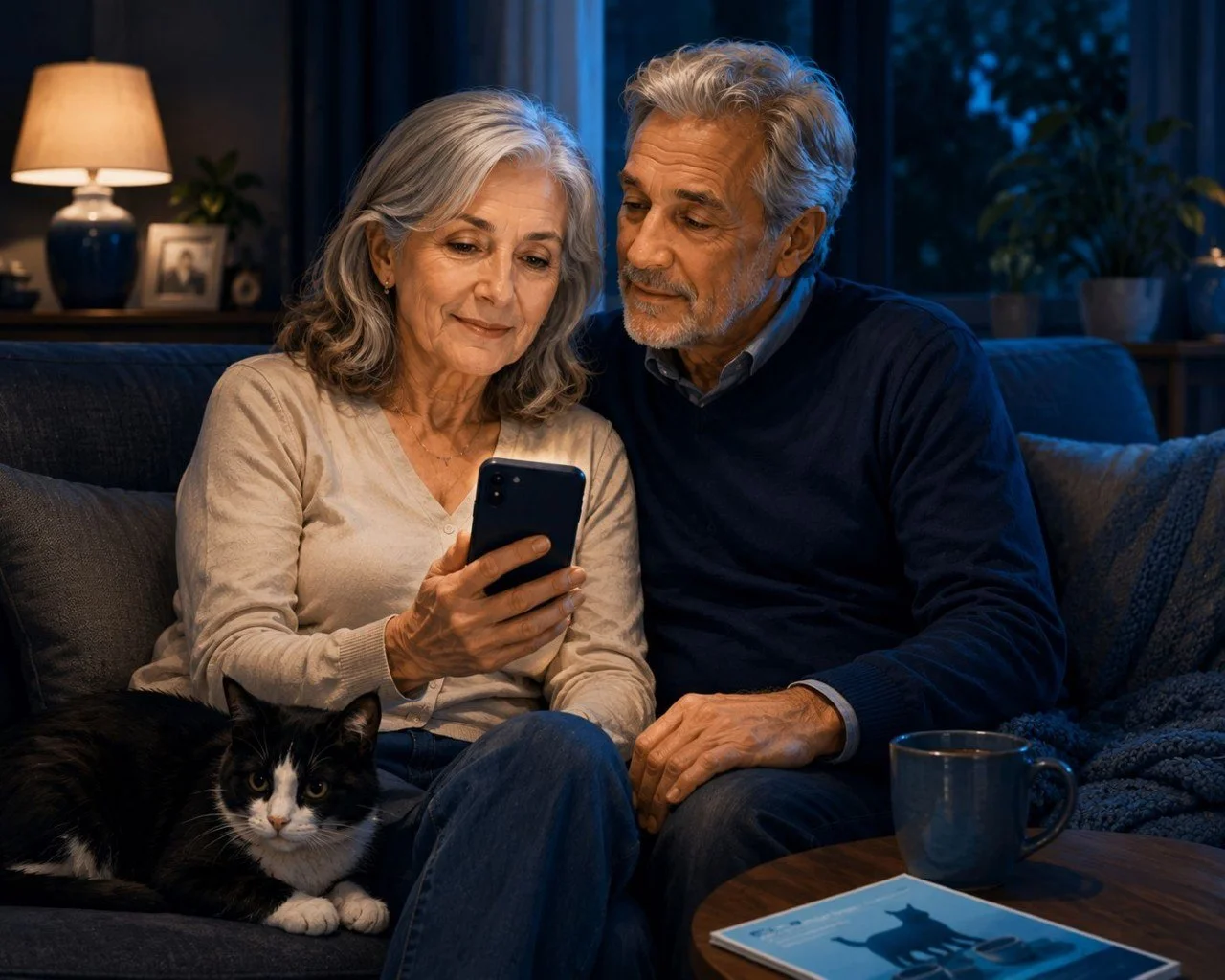
That night Hugo didn\'t wait for the next visit. He sent them a WhatsApp: the written note — so they\'d have it to hand — and a short audio where, in his own voice and without rushing, he apologised for having gone so fast and explained it again. The words had come from the AI; the "sorry" and the tone had not.
\nThe note he sent them by WhatsApp: «Lúa has a chronic kidney disease. It can\'t be cured, but it can be managed and she can live well. At home: 1) give her only the renal food we\'ve indicated, with no treats or scraps of normal food; 2) make sure she always has fresh, clean water available; 3) come back for the check-up when we schedule it. If she eats less, drinks much more or vomits, call us. Any questions, we\'re here.»\n
Same diagnosis, same truth — it can\'t be cured. The difference is that this time the Figueroas left feeling calm and knowing what to do. And a client who understands follows the treatment. That is medicine.
\nDo it yourself in 4 steps
- Open ChatGPT / Gemini / Claude and start a new chat.
- Paste the full prompt (you have it in your phone notes).
- At the end of the prompt, write your case plainly and anonymised: species, age and the clinical picture. No owner names.
- Send. Use it as a script — or an audio — and send the note to the client. Read it first: your judgement rules, and the tone is yours.
Tip: keep the base prompt in your phone notes so you always have it to hand.\n
The prompt · copy it
You are my assistant for explaining diagnoses to pet owners, not to vets.\nI give you a diagnosis or clinical term with the patient\'s data and you translate it\nso that a frightened person with no medical background can understand it.\n\nGive me TWO things:\n1) A spoken explanation I can use as a script in the consultation or in an audio for\n the client: no medical jargon, with ONE everyday comparison that makes it easy to\n understand, in a calm and empathetic tone, without alarming and without promising\n what isn\'t there (if it can\'t be cured, let that come through gently). Invite the\n owner to ask questions.\n2) A short paragraph (maximum 80 words) that I can print or send by WhatsApp,\n with what the owner needs to do at home, clear and in order.\n\nRules:\n- Use only what I give you. Do not invent data, doses or prognoses.\n- If the comparison you propose implies cure or reversibility, discard it:\n the metaphor must be faithful to the real prognosis.\n- Professional yet approachable English.\n- Do not include owner names or personally identifiable data.\n\nPaste the case here (species, age, diagnosis or clinical term and the essentials of the plan):Before → Now
10 min re-explaining, searching for the example that illuminates and, even so, owners who leave with doubts.
1 min for a clear explanation and a summary the client takes away — and attention free for what truly convinces: the tone. Per difficult case.
Before you start
Client data, out: describe species, age and diagnosis; never owner names, phone numbers or identifiable data in a generic LLM. Always anonymise.
- You decide what gets said. The AI finds the words; the clinical content, the prognosis and what to tell each client are your call.
- Check the comparison, not just the text. An easy but false analogy (one that suggests cure where there is none) does more harm than jargon. Let it illuminate without lying.
- Read the explanation before using it: make sure it doesn\'t oversimplify or promise what isn\'t there.
- Works on free plans (with a daily usage limit).
- Requires a connection: it is processed in the cloud.
Video transcript · Lúa\'s case — translating the diagnosis for owners with ChatGPT
Hugo, from Clínica El Roble, had just given a perfect diagnosis. Chronic kidney disease in a thirteen-year-old cat. The stage, the phosphorus, the diet, the follow-ups... All correct, all said. And the owners left the consultation without understanding a thing. And this sounds familiar, doesn't it? You explain well, quickly and thoroughly... and the client gets lost at 'creatinine.' His colleague Marta put it plainly: 'You were completely right. And they left without understanding.' 'Being right wasn't the job.' The problem isn't your medicine. It's translating it. That night, at home, Hugo decided to fix it. Watch what he did.
Bueno, pues aquella noche Hugo abrió su asistente, que en este caso utilizó Claude y puedes utilizar cualquier otro, pero bueno, abrió Claude y elaboró un prompt muy parecido al que tenéis como chuleta en la píldora, pero lo modificó un poco porque en este caso lo que pidió fueron tres cosas. Le dijo que era su ayudante para explicar diagnósticos, igual que hemos hecho, le dará un diagnóstico término clínico que se va a traducir para garantizar una persona asustada y sin formación médica y le pide tres cosas.
Una apertura breve para un audio, dos o tres frases en las que reconozca de forma natural que en la consulta fui demasiado técnico y quiero asegurarme de que se van con todo claro, tono cercano y honesto, sin sonar a protocolo ni a disculpas exageradas. Una explicación breve hablada para continuar ese audio sin jerga médica con una comparación cotidiana en tono tranquilo y empático, sin alarmar y sin prometer lo que no toca, que invita a preguntar. Y lo tercero, un párrafo corto, máximo unas ochenta palabras, para mandar por WhatsApp con lo que tienen que hacer en casa claro y en orden.
Le da las reglas, usa solo lo que te doy, no inventes datos, dos y ni pronósticos y la comparación que propones implicará curación o reversibilidad, descártala, la metáfora tiene que ser fiel al pronóstico, en español de España, cercano pero profesional y no incluyas nombres de propietarios ni datos personales identificables. También le dijo, te doy ahora el resumen del caso y se lo mandó, dice que ya está listo y se lo dicta. Gata, 13 años, enfermedad renal crónica, iris, estadio 2, creatinina 2,4, SMA 22, fósforo alto, densidad urinaria baja, plan dieta renal de prescripción y control en 3 meses.
Le damos ok, concluyo, tened cuidado, hay que estar despacito, le cuesta un poco y a veces tiene como un pequeño decalaje, así que es un pequeño tip, bueno, lo mandamos y nos va a venir aquí los tres elementos, la apertura para el audio, ahora soy el veterinario que atendió a vuestra gata hoy, quería llamaros porque en consulta uso a veces palabras muy técnicas y me he quedado con la duda de si os lo expliqué bien del todo, así quiero contároslo de otra manera, con más calma.
Una explicación hablada, lo que tiene vuestra gata es que sus riñones con los años han ido perdiendo parte de su capacidad de trabajo, no es algo que haya pasado de golpe, sino poco a poco, como le ocurre a muchas gatas de su edad, ahora mismo están funcionando pero no al 100%, para que os hagáis una idea, imaginad que los riñones son como un filtro de agua, con el tiempo ese filtro se va colmatando y filtra menos bien, no podemos limpiar el filtro pero si podemos cuidar mucho lo que le podemos delante, para que no se esfuerce más de lo necesario, por eso le hemos pautado una dieta especial, que tiene menos fósforo y menos carga de trabajo para sus riñones, no es una dieta cualquiera, es la herramienta más importante que tenemos ahora mismo, en tres meses la volvemos a ver para comprobar como está respondiendo, si tenéis cualquier duda, cualquier cosa que noteis diferente en ella, lo deis en llamarnos, y este sería el audio que podría mandar Hugo y además le mandaría un mensaje de whatsapp donde le pondría, os resumo lo más importante para casa, vuestra gata tiene que tomar solo dieta renal de prescripción, que os hemos indicado, sin premios ni otra comida, aseguraros de que bebe agua con facilidad, con varios bebederos disponibles, observar si come menos, bebe mucho más o está más de caída de lo habitual, y en este caso avisarnos, tenemos cita de control en tres meses, así que como habéis visto, pues ya tiene preparada la fórmula en este caso para mandarles a los Figueroa, la cual pues se va a retomar y si tuviese que utilizarlo en un futuro de forma que necesite algún tipo de apoyo, la IA le puede dar ese pequeño empujón para tenerlo mejor estructurado.
Como habéis visto además, todos los datos que se han dado pues son datos clínicos, sin identificar a ninguno de los, ni al paciente, ni a los propietarios, ni nada comprometido, esto es bastante importante que lo hagáis así, y como veis pues ha cumplido con todo lo que le hemos pedido. That night, Hugo sent them a written note and a voice message apologizing for going too fast. And here are the two things that truly matter. First: the tool gives you the words; the tone is yours. In that message, what reassured the Figueroas wasn't a perfect text. It was his voice, unhurried, apologizing and letting them ask. The second point — and this is clinical: always review the comparison.
If the AI tells you the kidney 'gets clean and good as new,' it's promising a cure that doesn't exist. Making the metaphor illuminate without lying is your judgment, not its. Because when someone understands their diagnosis, they follow the treatment. And that is medicine. You have the prompt to copy and the four complete steps in the pill.