
 Phase 1 · Win 10 minutes
The difficult email, without fighting the blank page
Pill 1.2 · Quick win · The AI gets it started, you sign it

Read the full story
The scene
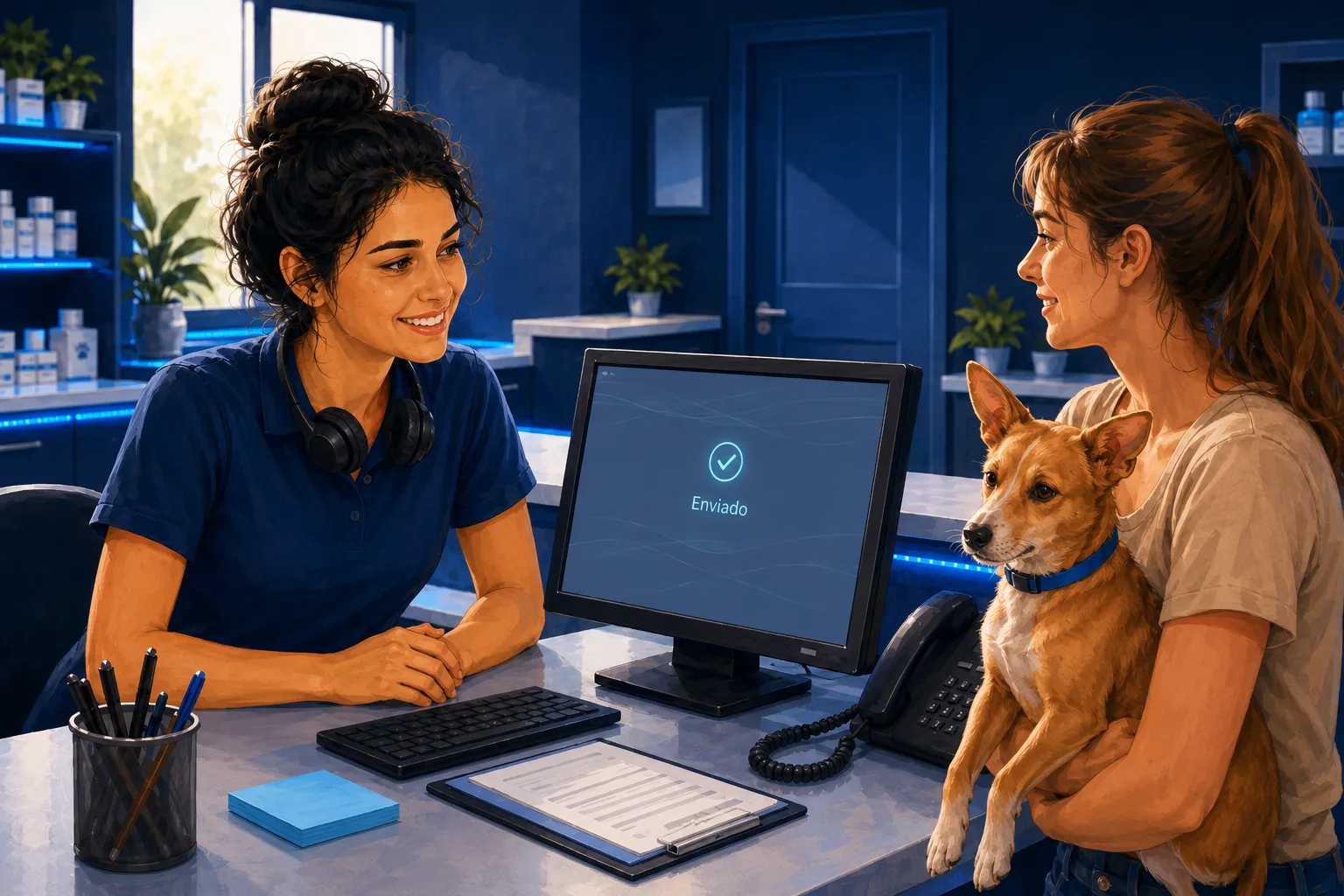
At ten past twelve, the El Roble clinic is more alive and more on the edge of collapse than at any other time of day. Sara has the phone at one ear and the waiting room at the other: Nube's owner —the podenco puppy, all legs— stands waiting to be called, and on the line there's a lady asking about the afternoon hours "just for a second". But what's really stuck in her, ever since she opened the email at nine, is Mr. Pacheco's message.
Mr. Pacheco has written in angry. He says the bill for Káiser's dental cleaning —his bulldog, whom he adores and overfeeds— doesn't add up with what he was told on the phone, that this is a rip-off, that at the one on the Paseo they wouldn't do this to him. And Sara knows the clinic is right: the estimate was signed, there were two extractions they warned about, everything is in order. But being right doesn't matter. Every sentence she writes comes out wrong: either it sounds curt, like she's answering grudgingly, or it sounds so soft that it seems the clinic did something wrong and is apologizing for a correct bill. She deletes. She starts again. She glances toward the exam room, but Marta is inside with a case and won't be coming out, and even if she did she wouldn't have two minutes. The email has been sitting there all morning. And Sara already knows the trap: the longer she leaves it, the worse it reads and the heavier it weighs.
The email that arrives — what Sara has had open since nine, the problem in his own words:
From: Antonio Pacheco
Subject: KÁISER INVOICE — this is not what I was toldGood morning,
I'm writing genuinely upset. I go to pick up Káiser and I'm met with a bill of €280 when on the phone I was told about a dental cleaning and little else. I understand you know your business, but no one warned me you were going to pull two teeth or that it cost extra. Káiser is family and I'll do whatever it takes for him —but finding out only when I pay doesn't seem acceptable to me.
Honestly, I'm thinking of taking him to the new clinic on the Paseo. I await your reply.
Antonio Pacheco
That email is the raw material of the pill: it exists, it's written, it bites. Sara's job isn't to understand it —she understands it perfectly well—, it's to answer it with the right tone without fighting the blank page.
The nudge
Hugo passes behind the front desk to grab something he needs and sees her: Sara's face between one call and the next, that second when she closes her eyes and lets the air out through her nose. He doesn't give her any speech —with Hugo, speeches are saved for the breaks—. He just rests his finger for a moment on the edge of the screen and says, quietly, "tell this to the AI in four sentences and have it leave it started for you". And he heads to the exam room before he becomes a bother. Sara looks at the blank email for the umpteenth time. She looks at Nube's owner, still waiting. And she thinks that anything is better than deleting the same sentence again.
The task
The awkward email: the complaint, the bad news, the bill that doesn't add up, the "we can't fit you in today". It's not hard to understand —Sara knows perfectly well what happened and what needs to be said—. It's hard to write with the right tone: neither curt, which makes people angrier; nor servile, which concedes where there's nothing to concede. Each of these emails takes 10–15 minutes of deleting and rewriting, almost always in the middle of the rush, with the phone ringing and someone waiting on their feet. And the worst ones never get sent: they stay open all morning, out of sheer paralysis, getting worse on their own. At the front desk it's not one email a day: it's several, and each one bites off a chunk of the day.
The unlock
The difficult email isn't hard because of the problem. It's hard because of the blank page. So don't start it yourself: tell the AI, in plain language and in four sentences, what happened and what you want to achieve, and ask it for a draft with a specific tone —firm but kind, clear without apologizing for something that isn't a mistake—. In fifteen seconds you have a decent starting point.
 4:39
4:39Audio in Spanish · subtitles in English, Spanish and Portuguese.
Do it yourself in 4 steps
- Open ChatGPT / Gemini / Claude and start a new chat.
- Tell it in four sentences what happened and what you want to achieve with the email (no real personal data).
- Paste the base prompt stating the tone (firm and kind) and who it's addressed to; read the draft and ask for any adjustments you need (shorter, different form of address, different closing).
- Check it with your own eyes —data, amounts, names— and send it.
Tip: keep the base prompt saved in your phone's notes or, better, turn it into your GPT (we'll see how) so you never have to paste it again.
The prompt · copy it
You are my communications assistant at a neighborhood veterinary clinic.
You're going to write an email to a client based on a situation I'm about to describe (tell me when you're ready).
Tone: professional, firm yet kind and empathetic. Use a courteous, formal register.
- Don't apologize for something that is NOT the clinic's mistake.
- Acknowledge how the client feels before explaining the facts.
- Explain with concrete facts, without sounding defensive.
- Always leave a door open (seeing them in person, by phone).
Format: 150 words maximum. Give me back only the text of the email.
Don't make up data, amounts or names: use only what I give you.
From there on you no longer write: you edit. You adjust it to the clinic's voice, cut what's unnecessary, check the data is right and send it. You go from fighting nothing to polishing something that already exists. The judgment about what to say and to whom is still yours; the AI only takes away the part that blocks you. It's not that the machine writes it for you: the machine leaves it started and you adjust it to your style and your mission. The email that goes out carries your name because the last word —and the signature— is yours.
Before → Now
15 min deleting and rewriting the difficult email, almost always in the middle of the rush —and the worst ones never get sent.
1 min: you describe the situation, a draft comes out with the right tone, you adjust it to your voice, check the data and send it.
Before you start
Client data, out: describe the situation without pasting real names, phone numbers or amounts into a generic LLM —"a client upset about the bill for a surgery" is enough for the AI to work with. You add the exact data at the end, in your own email.
- The email goes out with your name and the clinic's: always review amounts, dates and names before sending. That review is your judgment, it can't be delegated.
- The AI leaves the draft started; the last word —and the signature— is yours.
- It works on the free plans of any tool (with a daily usage limit).
- It needs a connection: it's processed in the cloud.
Video transcript · Pacheco case — writing the difficult email in ChatGPT
As we've already seen, clinics constantly get emails that are hard to answer… …and the hardest part is the blank page. Let's solve it with the help of artificial intelligence. We open ChatGPT and paste the prompt I've given you. You can adapt it; this is just one prompt idea. "You are a communication assistant at a neighbourhood veterinary clinic. You'll write an email to a client based on a situation I'm going to describe." It should let us know when it's ready. We set the tone: professional, firm, yet kind and empathetic. We want to address him formally — we could change that — and not apologise for something that isn't the clinic's mistake. It should acknowledge how the client feels before explaining the facts, explain with concrete facts without sounding defensive, and always leave a door open: meeting in person, a phone call, whatever works. About 150 words, returning only the text of the email, and it mustn't invent data, amounts or names: it should only use what we give it. We send it off… …and next we tell it what happened. It's ready. And, as in the previous chapter, dictating beats typing every time. The client is upset about a dental cleaning invoice. The estimate was signed, the two extractions had been flagged, and we want to calm things down without giving in where we shouldn't. As you can see, we haven't explained much. We send it and in a few seconds we'll have the result. It added a greeting: "We understand the cost of the dental cleaning may cause concern, especially when extractions are performed during the procedure. The invoice matches the estimate that was signed before the procedure; both extractions had been flagged in advance and are part of the necessary treatment within the dental procedure performed. We want to assure you that we review this kind of work with clinical judgement and that nothing outside the communicated estimate was included. That said, we understand your concern and we'd be happy to go over the invoice with you, answer any questions and explain the procedure again, either at the clinic or by phone. Best regards." We've got a draft. I think it could be a bit better, so we'll tell it: "Add a greeting for Mr Pacheco, make the email a bit softer and offer him a coffee", because this gentleman tends to appreciate that kind of gesture. It sends it back: it's added the coffee and we've got the greeting in. And if you like, we can also tell it: "make it a bit shorter". And now it's more concise: still offering the coffee, with the greeting, and with this same approach. Sometimes it's easier to copy the first draft and adapt it yourself rather than keep going back and forth. And there's our text.