Throughout this series, we have traveled a path that took us from understanding why change is inevitable, through the waves transforming our clinics, to discovering the automation tools that can give us back hours of administrative work every day.
Today we arrive at the heart of it all. At the second type of AI at our disposal — decision-support AI — and at the concept that gives meaning to this entire transformation: the Hero’s Work.
The expert colleague who never sleeps
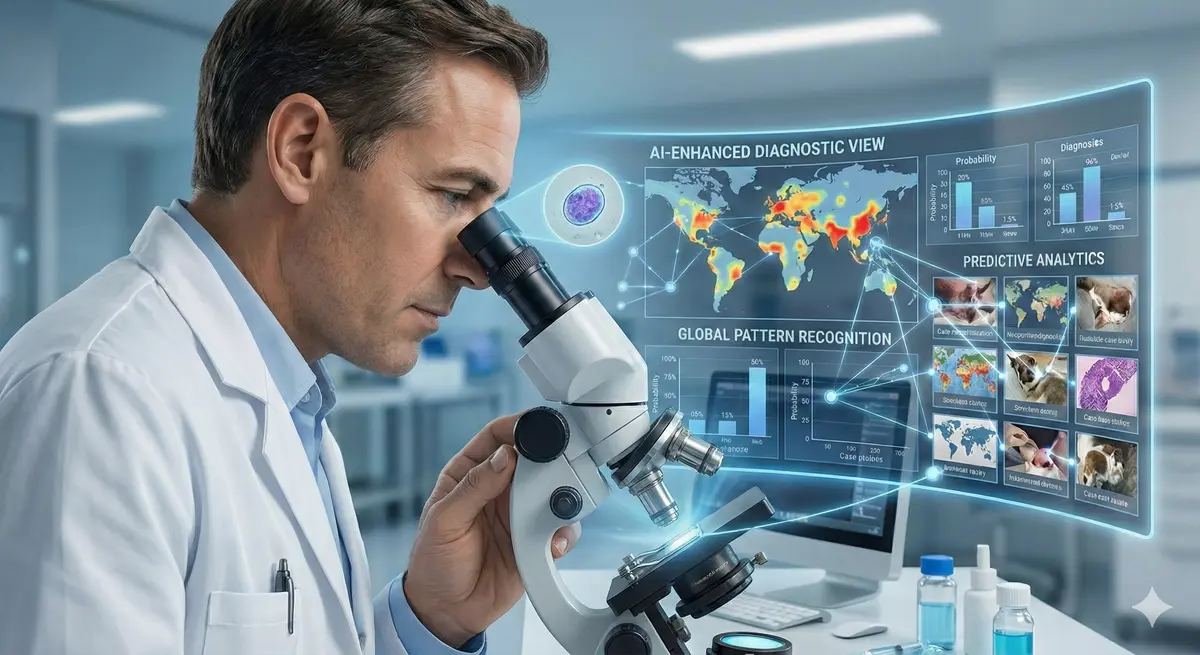
If automation AI gives us back time, decision-support AI gives us something qualitatively different: clinical superpowers. And I do not use the word “superpowers” casually. I am referring literally to capabilities that expand what an individual professional can do, see, and consider.
I want to be very clear from the start: we are not talking about a machine making the diagnosis for us. That is neither desirable nor possible with current technology, nor will it be in the near future. We are talking about having an expert colleague available twenty-four hours a day, seven days a week, who helps us think better, consider more diagnostic options, better support our decisions, and not overlook findings we might have missed.
A colleague who has processed all published veterinary scientific literature. Who does not have bad days or long nights affecting their performance. Who does not get tired after the tenth radiograph of the day. Who is available at three in the morning on a Saturday exactly the same as at ten in the morning on a Tuesday. And who, above all, does not have the cognitive biases that all of us, without exception, carry.
The real superpower: the antidote to our biases
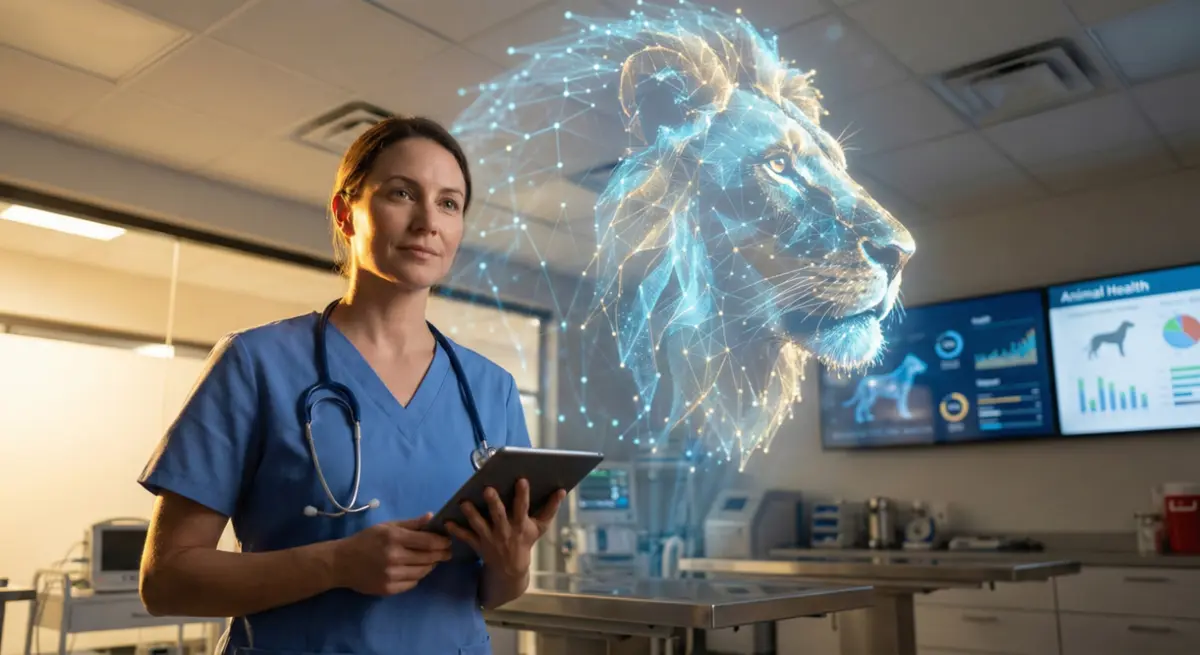
Because this is, arguably, the most profound and least intuitive benefit of clinical support AI: being the antidote to our own cognitive biases.
We all have them. It is not a personal weakness or a professional flaw. It is simply part of how the human brain works. Our brain uses mental shortcuts — what psychologists call heuristics — to process the enormous amount of information it receives every second. These shortcuts are enormously useful in most situations and allow us to make quick, generally accurate decisions. But in complex clinical contexts, they can lead us to diagnostic errors with real consequences for our patients.
Think about availability bias. It is the phenomenon whereby, if you have seen three cases of leptospirosis this week, your brain begins to consider leptospirosis as a diagnostic option with a frequency disproportionate to its actual prevalence in the population. Recent, striking information weighs more heavily in your mind than objective statistical probability. You have seen a lot of lepto this week, so your radar for lepto is at maximum sensitivity — sometimes at the cost of considering other, more likely options.
Or think about confirmation bias, perhaps the most dangerous of all in medicine. Once you have formed a diagnostic hypothesis, you unconsciously give more weight to findings that support it and downplay those that contradict it. It is the tunnel vision we have all experienced at some point, especially on long days when cognitive fatigue accumulates and our ability to keep an open mind to diagnostic alternatives diminishes.
A good clinical support AI tool directly counteracts these biases. It analyzes all available data without prejudice, without fatigue, unaffected by whether it is the middle of the night or after twenty consecutive consultations. It has processed millions of cases and can identify patterns, correlations, and associations that our individual experience, however extensive, simply could not encompass — because no single professional can see that many cases in an entire lifetime of clinical practice.
Diagnostic imaging: a second pair of eyes that never tires
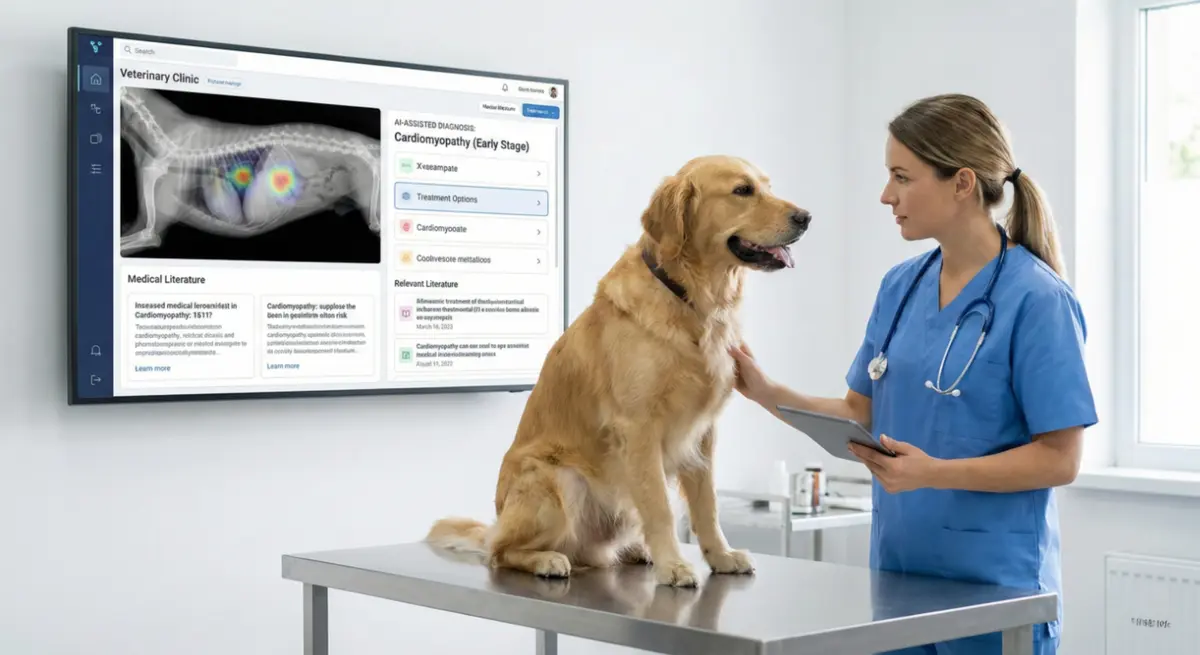
A concrete and very tangible example of this type of AI are the platforms for AI-assisted radiological analysis. There are specialized tools that can analyze a radiograph in a matter of minutes and flag potential abnormalities — from obvious findings you could spot yourself to subtle changes that might go unnoticed during a quick read between consultations. Some of these platforms are trained to detect dozens of different findings using massive image sets reviewed and validated by certified veterinary radiologists.
Do they give you the final diagnosis? No. That remains your job, your professional responsibility, your clinical integration combining the image with the physical exam, the patient’s history, laboratory results, and your accumulated experience. But these tools ensure something of enormous value: that nothing slips past you. They are a second pair of eyes — one that is completely objective, that is not in a rush, that is not distracted thinking about the next patient, and that works with the same precision and attention to detail regardless of how tired you are or how many radiographs you have read that day.
The key here, as we mentioned in the article on how to evaluate AI, is to always look for tools that are radically transparent with their validation data. Tools that openly publish metrics such as sensitivity and specificity by finding type, that state what studies they were validated in and with how many cases. Not those that simply claim to use “advanced AI” or “state-of-the-art algorithms” without offering a single piece of data to back up that claim.
Transparency in performance metrics is the first and most important selection criterion. If a vendor cannot tell you how good their tool is with concrete, verifiable numbers, you should think twice.
The comprehensive clinical copilot
The next level of sophistication is the comprehensive clinical assistant or copilot. Platforms that are not limited to a single diagnostic task but aspire to connect all available patient information in a single intelligent access point: their complete history, the latest lab work with trends, diagnostic image interpretation, your previous clinical notes, current and past medications.
Their goal is to work with you on the complete patient picture. To present differential diagnoses based on all available evidence, not just the symptom that prompted today’s visit. To help you think more holistically, considering drug interactions, breed predispositions, chronological patterns in the patient’s data, and other aspects you might overlook on an especially packed day of consultations.
And beyond purely clinical support, these platforms can assist you at multiple levels of your daily work. At the clinical level: interpreting complex lab results, explaining a rare pathology, looking up drug dosages in specific situations or their contraindications when comorbidities exist, suggesting complementary diagnostic tests that could be revealing.
At the communication level: preparing a complete and professional referral report, drafting post-surgical instructions adapted to the owner’s level of understanding, even helping you structure the delivery of bad news in an empathetic, respectful, and clear way — one of the most difficult and emotionally demanding tasks in our profession.
It is, in essence, like having a brilliant resident always by your side. One who has read all the literature, who is never too busy for you to consult, who has no ego, and who is always available to offer you a well-founded second opinion when you need it.
The Hero’s Work: what AI can never do
Everything we have explored in this article series converges on one central idea that I want you to take away as the most important reflection: we must let AI handle part of our work so that we can fully dedicate ourselves to the work that only we can do.
I call this the Hero’s Work. And it is what defines you as veterinary professionals:
It is the physical exam where your hands detect that subtle mass no algorithm in the world would detect. That palpation where the texture, temperature, and mobility of a tissue tell you something that only years of clinical experience have taught you to interpret.
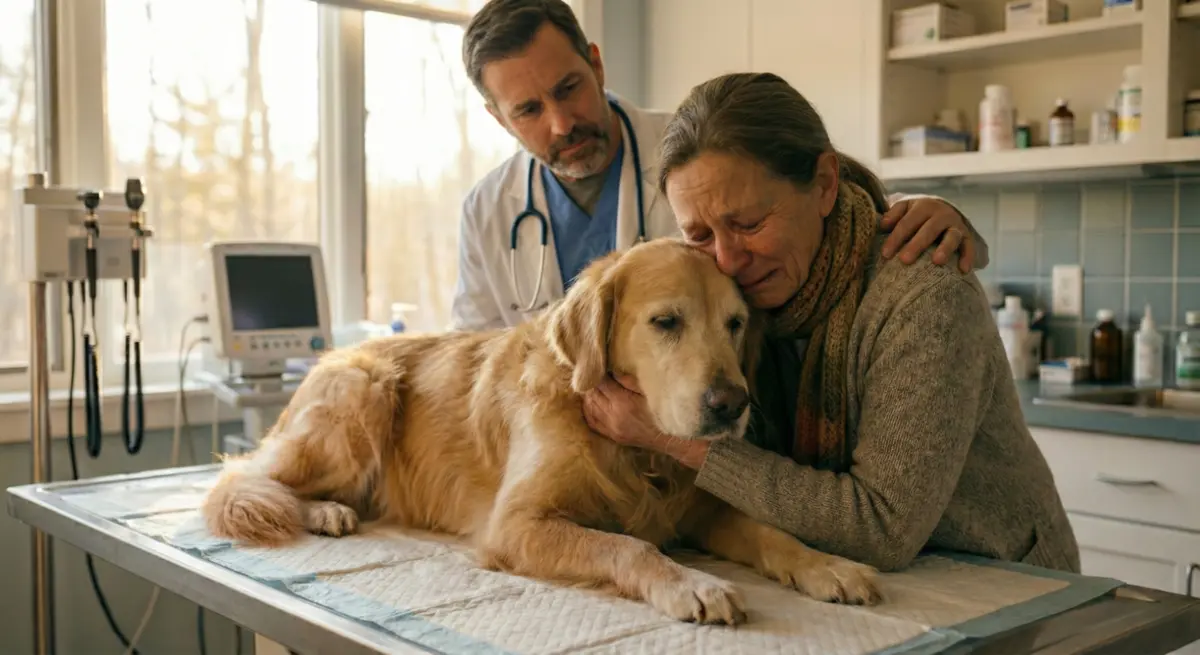
It is the genuine empathy with an owner who has just lost their companion of fifteen years. That deep human connection, that being truly present in another person’s most difficult moment, that no artificial intelligence will ever be able to replicate because it lacks the subjective experience of pain and compassion.
It is the face-to-face communication where you calibrate the client’s understanding in real time. Where you read their body language, their unspoken doubts, their fear, their hope, and you adapt your message second by second so that the information is not just correct, but received, understood, and accepted.
It is the clinical judgment that integrates objective data with experience-forged intuition, scientific evidence with individual context, science with art. That decision you make when the data is inconclusive, when the lab results do not add up, when something does not fit — but your experience tells you which path to follow, and you take responsibility for that decision.
It is the precise technical execution of treatment — that surgery where the skill, delicacy, and experience of your hands make the difference between a good outcome and an extraordinary one.
Everything else — documentation, routine follow-up calls, vaccination reminders, searching for that article you read three years ago, managing inventory, juggling the schedule, writing reports — is absolutely necessary work. But it is work that takes time and energy away from what truly matters and what truly makes you irreplaceable.
The virtuous circle that transforms your clinic
When automation AI and decision-support AI are implemented correctly and in an integrated fashion, what I like to call a virtuous circle is generated — one that strengthens the clinic from every angle simultaneously.
Better medicine, because you have more information available, fewer cognitive biases interfering with your decisions, and more time to dedicate to each patient individually. Better-supported decisions. Fewer errors from oversight or fatigue. Greater confidence in your diagnoses.
Greater operational efficiency, because by automating repetitive and administrative tasks, each team member can dedicate more time to what truly adds differential value. The result is a greater capacity to see patients at the same quality level, or even higher quality with the same patient volume. A direct impact on the clinic’s profitability.
Greater satisfaction, for both clients and the professional team. Clients feel more heard, better informed, and better accompanied because you dedicate the time they deserve — time that paperwork used to steal from you. The team experiences less professional burnout because they can focus on their true vocation, while feeling supported by tools that make them more effective and more confident in their decisions.
It is a circle that feeds back positively: better medicine generates more satisfied clients, which increases revenue and the clinic’s reputation, which allows investment in more tools and better team training, which in turn further improves the medicine you practice and the experience you offer.
The decision is in your hands
The tsunami is already here. It is not a prediction or a future scenario. It is the present of our profession. We can let the wave sweep us away or we can learn to ride it with the right tools and the right knowledge.
And ultimately, this is not about technology. It is about reinventing what it means to be a veterinarian in the 21st century. About reclaiming time for what truly matters. About practicing the medicine we always wanted to practice but the administrative burden would not let us. About falling in love with our profession all over again.
AI is not coming to replace us. It is coming to free us from the noise so we can do more — and better — the Hero’s Work that defines us as professionals and as people.
The wave is here. The board is at your disposal. The decision to get on is yours. But remember: those who get on first will have the best position to surf.
This article is part of the “AI & Veterinary Medicine” series by KyberVet. If you found it useful, share it with your team. Transformation is a journey best traveled together.