
 Phase 1 · Win 10 minutes
‘Do we really need that?’
Pill 1.8 · Quick win · Do not defend your price: explain the value and anchor it in the animal

Read the full story
The scene
Monday morning, early November. The waiting room smells of wet towels —there is a fine drizzle outside— and is packed: a pushchair, two cats sizing each other up from their carriers, and Don Ramón, who has come without an appointment just to weigh Toby on the scales he always uses. The phone has been ringing since they opened. Sara picks it up again, pen already in hand.
It is a new voice. Young, speaking a little hurriedly, with a puppy making noise in the background.
—Hi, look, we’ve just got a little dog and we’re looking around… —paper rustles— …we’re phoning a few places, to be honest. Just to see.
Sara recognises it immediately: first-time owners, comparing options. And she handles it well, because this is what she is good at. Before anything else, she asks about Nube —how old she is, where they got her from, whether she is eating— and talks them through what she knows by heart: when the first vaccinations are due, worming, the microchip. Everything flows smoothly. Until the woman reaches the next item on her list.
—Right, and one thing. The clinic on the main road told me they have an all-inclusive plan, twenty-three a month and that’s it. But you’re talking about… a blood test? The clinic on the main road didn’t mention one. —A pause—. But do we really need that, or…?
And that is where Sara freezes, pen poised in mid-air. Because they have only recently started doing the blood test at the first appointment, and she is not a vet, and she knows that if she says the first thing that comes into her head —‘it’s because we’re more thorough here’— it will sound exactly like what the woman fears. That they are trying to take advantage of her when the puppy has only just arrived home.
The nudge
So Sara does not improvise. She does what someone who knows the limits of her role does:
—Look, I’m really glad you asked that specific question. It’s something we’ve only recently started doing, and I’d rather explain it properly than give you half an answer. Would you mind if I checked with the vet and called you back myself this afternoon? I promise I will.
The woman appreciates it. They hang up.
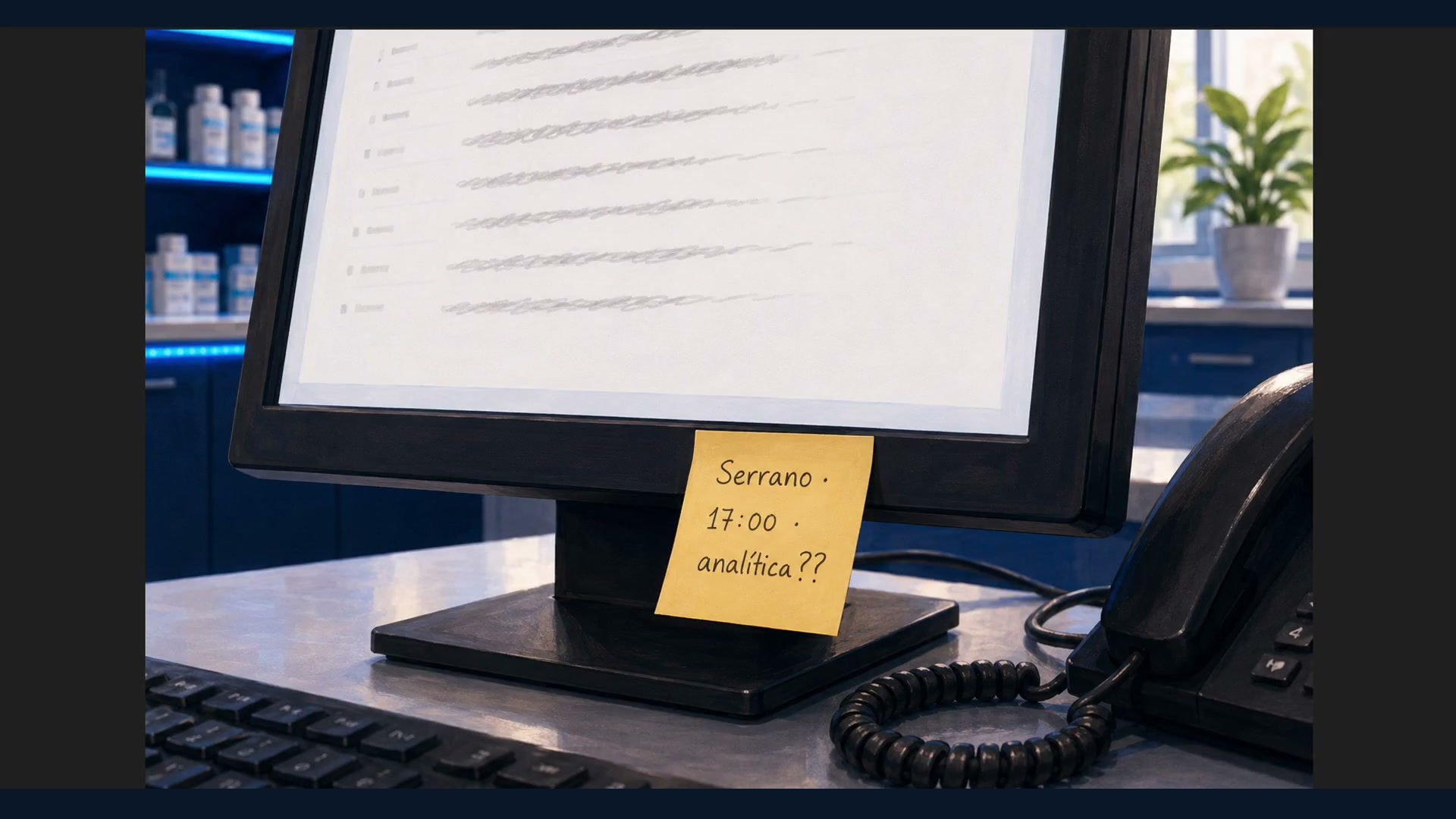
And Sara is left feeling uneasy, because ‘I’ll call you this afternoon’ is no use if she still does not know what to say at five o’clock. She looks at the sticky note: three clinic names, a few figures and her cramped handwriting. It is not the first time this week. On Thursday, it was the free blood test; today, the plan from the clinic on the main road. That clinic is no longer a shadow that looms at closing time: it calls in the mornings.
She brings it up during the mid-morning lull. Not as ‘I don’t know what to say’ —that is not Sara’s style—, but for what it is:
—Marta, we need to be clear about this. And not just me.
Marta looks at her and sees it at once, because today’s call is not the real problem. The problem is that whenever someone compares them with the clinic on the main road, either they simply quote the price and lose the client, or someone becomes defensive. And given what Marta believes it is worth to walk through that door, that rankles. She knows the reasoning behind the blood test inside out —it is her medicine—. Putting it into four sentences short enough for a reception phone call, without making them sound like a sales pitch, is another matter. They sit down together.
The task
It happens to every neighbourhood clinic: a call comes in about the all-inclusive plan next door, and there are three ways to answer, all of them bad. Quote the bare price —and you are at the mercy of whoever has the lowest figure, which will never be you—. Justify yourself —‘we have better equipment, we do more’— which means talking about yourself, your machines and your costs, when the caller only cares about her dog. Or, worse, imply that the other clinic is doing it wrong, and come across as a desperate salesperson.
And there is a fourth way, one that does not come naturally: do not defend the price; explain the value —and anchor it in Nube, not the clinic—. The blood test is not an add-on to inflate the bill; it is a way to look inside this puppy, create a snapshot of her health today for comparison in the future, and lay the groundwork for when she needs to be put under anaesthetic to be spayed. Put that way, it is not selling: it is explaining. But you cannot improvise that on the spot, with a phone in one hand and a full waiting room. It has to be prepared and close at hand.
Sara and Marta’s task, then, is not to write a sales script. It is to prepare a few honest sentences for when that call comes in: ones that explain the reason without sounding like a brochure, that neither lower the price nor apologise for charging it, and that end with the only thing that truly stops the comparison —an appointment to meet Nube—.
The breakthrough
When someone compares your price with the low-cost clinic’s, the natural reaction is the worst one: to defend yourself. And there are three ways to do that, all of which lose —quote the bare figure, justify yourself by talking about your equipment and your experience, or hint that the other clinic does things less well—. AI can help you prepare what to say… but only if you ask it for the right thing. And here is the nuance that changes everything:
- Do not ask it to convince the client. Ask it to explain the value. They sound the same, but they are not. If you write, ‘justify the price and convince them to stay with us’, the machine gives you a salesperson —it will talk about ‘comprehensive care’, compare you with the clinic next door and even give itself advice on how to ‘win clients’—. If you write, ‘explain the reason, talking about the animal’, it gives you someone who cares. The same machine; a different question.
- Anchor it in the animal, not in yourself. The most common mistake is to talk about our time, our equipment, our personal approach. The caller does not care about your clinic: she cares about her dog. Use the animal’s name. ‘What we’re looking to do with that blood test is get to know Nube’s health properly’ dismantles in a single sentence what no argument about you can.
- Tell it what you do NOT want. Half the technique lies in the list of ‘don’ts’: no selling, no talking about your equipment, no criticising anyone, no discounts, no quoting the bare price. It is the guardrail that keeps the tone where you want it.
And then there is the limit, which matters here more than ever: AI will write the rationale for anything equally well —whether it is indicated or not—. It sells you a blood test that is needed and one that is unnecessary with equal elegance. The machine does not decide whether that test makes sense for this puppy: you decide that before writing a single line. AI gives you a head start on the wording; you provide the clinical judgement, the tone and the final sign-off.
 13:02
13:02In action
This genuinely came out of two Gemini chats using Nube’s case. And if you try it yourself, you will get something similar —never identical, and that is precisely the sign that it is a draft, not a verdict—.
The blunt request —‘…justify our price and convince them to stay with us’—. The content is correct, but look at the packaging:
‘…the greatest act of preventive medicine and safety… Other clinics prefer to simplify the plan to adjust the initial price, but we prefer to offer comprehensive care… we’d love you to come and visit the clinic, see the facilities and have a chat with the veterinary team…’
And it finished with a list of ‘tips’ for the call: ‘Use the words “Safety” and “Comprehensive care”’, ‘A personal approach at reception wins clients’. It is teaching you how to sell. It talks about us and the facilities, and compares us with the clinic next door —in fact, in those same tips it tells you, ‘do not speak badly of the other clinic’, two lines after saying, ‘other clinics prefer to simplify the plan to adjust the price’—. You asked it to persuade, and even it cannot resist.
The considered request —same case, same Gemini, but ‘explain the reason by anchoring it in Nube; and I don’t want it to sound like a sales pitch, mention our equipment, criticise anyone, offer discounts or simply quote the price’—:
‘That blood test is like taking a “photograph” of her on the inside today… having her blood values from when she is a puppy gives us a map for her whole life. If Nube becomes unwell one day, we will already know what her own normal reference values are, rather than those of just any dog… if you’d like, you can bring Nube in for an initial consultation.’
Same animal, same machine. The only thing that changed was the question. The price disappeared, the facilities disappeared, the dig at the other clinic disappeared; Nube arrived.
And then comes the adjustment, which Gemini does not make. Marta reads the four options and does what no machine can do for her. She takes ‘it assures us that her organs are working properly before giving her the first vaccinations’ and changes it twice: not ‘assures’ —a blood test helps us check; it does not guarantee anything one hundred per cent—, and out goes ‘before the vaccinations’, because she does not want to imply that a puppy cannot be vaccinated without a blood test: that is scaremongering, and it is not true. She chooses the version that sounds like Sara and removes anything that smacks of a manual. And she adds what was missing: ‘and if at any point your budget doesn’t stretch to everything, tell us and we’ll prioritise what Nube needs right now’. Because what separates someone who advises from someone who pushes a product is not the blood test: it is being prepared for the client not to buy it.
Do it yourself in 4 steps
- Open Gemini (or ChatGPT / Claude) in a new chat and describe the case as you would to a colleague: who is calling, what they are comparing and what they are asking you —including the animal’s name—.
- Change the question. Do not ask ‘convince them’ or ‘justify the price’: ask, ‘explain the value by talking about the animal, not about us’. That verb determines everything.
- Give it the list of ‘don’ts’. No selling, no talking about your equipment, no criticising anyone, no discounts, no quoting the bare price. And end by inviting them to book an appointment, without any pressure.
- And then do your part, which cannot be delegated: choose one, give it your voice, check that it does not exaggerate (watch out for ‘guaranteed’, ‘assures’ and ‘absolute’), decide whether it is genuinely indicated, and add the honest way out if money is tight.
Marta’s tip: before writing anything, be clear about the answer to a question AI will not ask you: would I recommend this even if they were not going to pay me for it? If the answer is yes, explain it confidently. If it is no, no prompt in the world should help you push it.
The prompt · copy it
CONTEXT
I work at the reception desk of a neighbourhood veterinary clinic. We do not compete on price, but on knowing each animal well. I receive a call from [who: e.g. first-time owners who have just adopted their puppy, Nube] comparing clinics: another clinic is offering [something cheaper], and they ask me, with some suspicion, why ours includes [the test/service] that the other clinic did not mention.

TASK
Write 3 or 4 short responses for me to say over the phone —not to read like a brochure—. They should explain the reason by anchoring it in [the animal]: [reason 1], [reason 2], [reason 3].

BOUNDARIES
- Do not make it sound like a sales pitch.
- Do not talk about our equipment, experience or facilities.
- Do not criticise the other clinic.
- Do not offer discounts or simply quote the price.

CLOSING
End each response by inviting them, without pressure, to bring [the animal] in for a first appointment.

LANGUAGE AND TONE
British English, warm and approachable.
Before → Now
Before. A call comes in about the all-inclusive plan next door, leaving you with two bad options: quote the price —and compete on the one thing you cannot win on— or start selling —and make it obvious—.
Now. Five minutes: you ask AI to explain the value anchored in the animal, with your list of ‘don’ts’, and select a few sentences that explain the reason without selling and end with an appointment. What the machine says changes completely depending on how you ask; what receives your sign-off is not its decision.

Before you begin
- AI drafts the rationale; it does not decide the indication. It can argue equally well for a test that is needed and one that is unnecessary. You decide beforehand whether it is indicated for this animal —that is veterinary judgement, and it cannot be delegated—.
- AI will not give you the same thing twice. The same prompt will return different versions —similar in substance, different in wording—. This is normal, and the best proof that it is giving you a draft to choose and refine, not a definitive answer.
- Check that it does not exaggerate. Here, Gemini said ‘assures us’ and ‘absolute safety’; no blood test guarantees either. Remove the superlatives.
- Anchor it in the animal, not in yourself or the price. And do not enter any unnecessary client data into the chat.
- It is there to help you prepare how to say it, not to be a bot that speaks for you. There is still a person on the phone; that is precisely what sets you apart.
- The golden rule: if they are only looking for the lowest price, let them go with kind words. Not everyone is your client, and that is all right.
- Works on free plans (with a daily limit). Requires an internet connection.
This pill’s approach to pricing draws on the work of Pancho / Miguel Ángel Díaz, veterinary coach, on how to talk about money in the clinic. If you would like to explore the subject further: www.newwaycoaching.es. (External resource, outside the story.)