
 Phase 2 · You do more than write now
Let it test you
“The house notebook” series (3 of 5). Hugo reads eleven feline guidelines in English, yet days later pulls a reluctant cat through the carrier door. Amparo, seventy years old and a veteran professor, offers the remedy: knowing means being questioned and answering in your own words. Gemini Notebook turns foreign-language guidelines into targeted flashcards and a short-answer quiz that remembers what you got wrong.
Pill 2.7 · Series «The house notebook» (3 of 5) · Flashcards and a short-answer quiz, in Spanish over English sources KYBERVET Academy · Clínica El Roble · Phase 2: Make it work, not just answer · Video · 12:44
We read more than ever and retain less than ever. Skimming a guideline, glancing at headlines, and come Monday, with the cat right in front of you, you cannot remember the detail that mattered.
Gemini Notebook can generate fifty flashcards in Spanish from English guidelines in a single minute. If you give it no instructions, many read like university exam trivia: you get them right, yet nothing changes on Monday. With a brief, it asks what you will actually need. With short answers, it forces you to respond in your own words. And it remembers what you missed.
At El Roble, Hugo scored 89%. That same week, he had pulled a cat out of her carrier through the front door.
Chapters · 12:44
- · Intro: reading is not knowing
- · 55 flashcards in one minute
- · What you get without a brief
- · The translation misleads
- · The brief decides the test
- · Situations, not theory
- · Short-answer: recall, not recognition
- · The correction and the details
- · The grader doesn’t see the sources
- · Forcing the error
- · What am I missing: asking the chat
- · Your clinic’s rules come from you
Read the full story
The scene
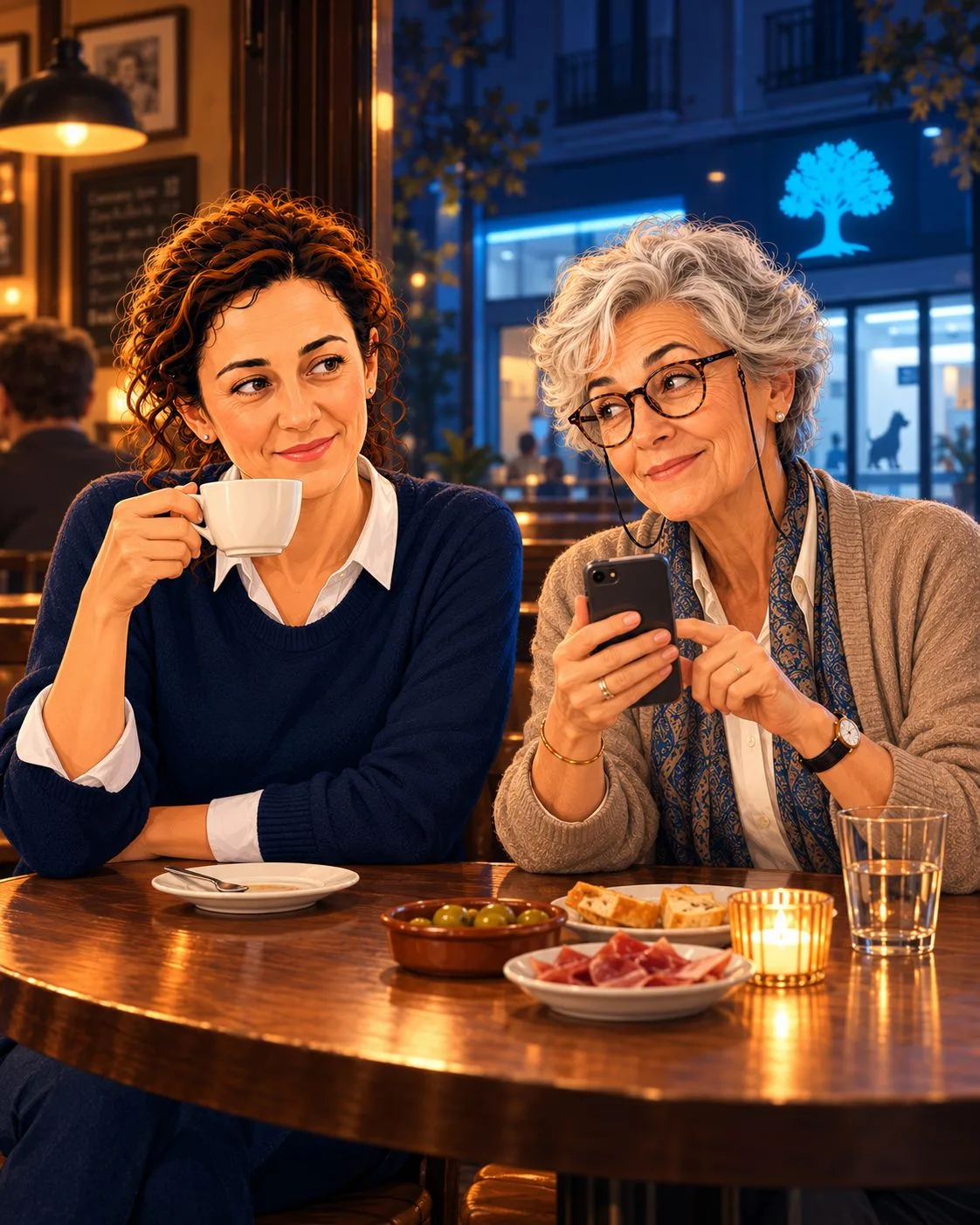
Thursday, past eight-thirty in the evening. The café across the street has its coffee machine running and three tables occupied. Through the large front window you can see the El Roble sign, cyan reflecting against the wet pavement.
Amparo is already seated when Marta arrives. Seventy years old, neatly trimmed white hair, reading glasses hanging from a cord around her neck. She taught Marta physiology in third year and failed her on a midterm exam Marta still remembers. Since retiring, they meet every two or three months, and Amparo always picks up the bill.
— You look like you came to tell me something.
— About Hugo.
Marta explains that he is good. Very good, in fact, and eager to prove it. Over the weekend he read through all eleven guidelines in the notebook they set up to handle cats more gently—all in English—by asking the chat for summaries. And on Tuesday Mora came in, a ten-year-old black cat who refused to leave her carrier, and Hugo pulled her out through the front door. With affection, but pulling nonetheless.
— Diego popped the lid off without saying a word. The caregiver didn’t even notice. Nothing happened.
— But he had read it.
— On Sunday. It’s right there in the guideline.
Amparo stirs her coffee.
— Just like everyone, girl. Reading is not knowing. Knowing is being asked a question and having to answer it yourself.
The push
Amparo takes her mobile phone out of her handbag and scrolls without hurrying, looking for something with one finger.
— I’m writing an article for the veterinary association journal. Forty years in the faculty, imagine that. I read thirty papers, and a week later I couldn’t remember half of them.
She turns the screen towards Marta: a flashcard with a question and, at the bottom, a red cross and a green tick.
— The notebook generates them for me from what I’ve read. Ten every night. The ones I get wrong pop up again the next day.
— You?
— I spent forty years setting exams. Now the phone sets them for me. Girl, if I can do it at my age, why shouldn't you?
Marta laughs. Amparo does not.
— And it’s not just for the lad. Do you know those guidelines yourself?
Marta does not answer right away. She read them, like everyone else. Skimmed them.
— Exactly. For everyone. And for whoever joins the team next month.
When they leave, the El Roble sign is still glowing across the street.
The task
The next day, Marta says nothing to Hugo about the carrier. She tells him Amparo suggested they all test themselves. At 20:10, Hugo opens the eleven-guidelines notebook and clicks Flashcards without touching any other setting.
In less than a minute, he has fifty-five of them, in Spanish. He works through them in one sitting, clicking the tick or the cross. An 89%. The screen displays «Well done».
Marta peers over his shoulder. Some cards are genuinely useful. Others ask which wild ancestor the domestic cat descends from, what Pillar 3 states, or how many hours of fasting are required prior to anaesthesia. And there is one about why a cat carrier must have a detachable top. Hugo got that one right. He stares at it a second longer than necessary.
— Mora — he says, without anyone asking.
Marta says nothing. Hugo clicks Flashcards again, and this time writes a brief: for the team of a small clinic, real-life situations rather than theory, following the visit from the initial phone call to departure, and no pharmacology. Twenty-five cards come back. Number fourteen reads: «The cat does not wish to leave its detachable carrier. How should you proceed to begin the physical exam?».
It is the exact same question as before, but framed as an everyday situation. Hugo marks the cross.
Next, he tests the short-answer quiz, where there are no options to choose from and he must write his answer in his own words. A question comes up about preparing the consulting room for a cat after seeing a dog. He replies the way he always does: odour control, noise control, advance preparation. The grading appears at the end: «Your answer mentions general concepts […], but it is too vague. Concrete details are missing». Below it, the expected answer: remove dog hair, empty the waste bin, clean with unperfumed products, ventilate.
Hugo asks the chat what went wrong. The chat tells him his mistakes «concentrate on answering with broad labels or general summaries rather than detailing concrete clinical actions». And it tells him which guideline to review and exactly where.
— Just the headlines — says Marta.
— Yeah.
Before sharing it with the team, Marta opens each quiz question one by one. The edit screen notes that the grading AI has no direct access to the notebook sources, only to what is written right there. So she reads every model answer in full. In one, it says that scruffing is «prohibited». Marta changes it to «in this clinic, we don't do that». Guidelines recommend; here, she is the one who decides.
Sara works through her deck on her mobile between phone calls. On the card about a barking dog in the waiting room, the suggested answer proposes that the caregiver wait inside the car with the cat.
— People walk here.
She edits it: if a consulting room is free, they go straight in; if not, the carrier goes onto the counter shelf, up high, covered and away from dogs. Never on the floor. She pauses, then adds a line: «And Roble goes to the back room». The card is marked as edited.
Diego completes his on Sunday without commenting.
On Monday during morning rounds, all four are holding their phones. On the counter shelf, where Roble used to sleep, sits the clinic’s loaner carrier, covered with a towel to make it clear whose spot it is. Roble watches it, deeply offended, from a chair in the waiting room.
Marta’s phone buzzes. It’s Amparo.
«How many did the lad get wrong?»
«Four. Me, two.»
«Good. Tomorrow, those two.»
The unlock
If this is your first time opening Gemini Notebook, start with the «What is Gemini Notebook?» video in pill 2.5.
One. Reading is not knowing: let it test you. Rereading creates an illusion of knowing. What truly cements learning is having to produce the answer yourself; in cognitive science, this is known as retrieval practice. In Studio, «Flashcards» builds a deck from your notebook sources in under a minute, in whichever language you choose, even when the sources are in English. Flip the card, mark whether you knew it, and once finished, repeat only the ones you missed. Keep in mind that the translation can be misleading: the option is labelled «Cards not yet mastered» or «Only cards that are missing», which refers to those you answered incorrectly. The «Explain» button opens the chat with a detailed explanation of that card along with its citations.
Two. The brief shapes the exam. If you give it no instructions, it mixes everything together. Very useful cards will appear, but so will academic exam trivia (the wild ancestor of the cat, the five pillars), topics that do not belong in a deck for the entire team (pre-anaesthetic fasting, anxiolytics), and suggestions that make no sense in your practice (a cat-only waiting room you do not have).
With a brief in the «What should the topic be?» box, you specify who it is for, what situations you want, and what to leave out, returning cards you can actually use on Monday. It is the same knowledge framed differently: «why must a carrier have a detachable top?» is not the same as «the cat won't leave the carrier, what do you do?». The brief stays saved with the deck, so anyone who opens it can see how it was built.
Three. With short answers, recognition is not enough: you have to recall. With multiple-choice options, you recognise the answer when you see it. With short answers, you have to retrieve it yourself. Under «Question types», untick the two default options and leave only «Short answer». The tool grades everything at the end, question by question: correct, partially correct, or incorrect. For each one it explains what was missing, provides a model answer, and allows you to retry only the ones you got wrong. It does not penalise a short response; it penalises missing the clinical detail.
Afterwards, ask the chat about that quiz: what you missed, whether it spots a pattern in your mistakes, and which source to revisit. From flashcards, the chat only knows how many you have completed; from the quiz, it knows exactly what you wrote.
And before sharing it with anyone, review how it grades. Under the three dots on each question, «Edit question» reveals the model answer and scoring criteria: what must be included, the fatal errors that fail the question, and vague phrasing that should not pass. The grading AI cannot see the sources, only those instructions. If a criterion is flawed, the grading will be wrong. You set the criteria.
What came out of El Roble
| Without a brief | With a brief | |
|---|---|---|
| Flashcards | 55, in less than a minute | 25, in less than a minute |
| Sample card | «What key structural feature must a "cat-friendly" carrier have to facilitate clinical examination?» | «The cat does not wish to leave its detachable carrier. How should you proceed to begin the physical exam?» |
| Exam-style trivia | The domestic cat's wild ancestor, the five pillars one by one, the objective of the 2022 guidelines | None |
| Shouldn't be there | Pre-anaesthetic fasting times, when to administer anxiolytics, sedation protocols | None |
| Don't work at El Roble | The benefit of a cat-only waiting room | Waiting in the car with the cat (edited by Sara) |
The tool builds the flashcards. What belongs in your clinic is up to you.
Do it yourself in 4 steps
- Prepare the notebook. Open the notebook with your sources and untick anything that is not a primary source, such as an AI-generated report. The flashcards must be grounded directly in the guidelines.
- Generate the flashcards with a brief. In Studio, click Flashcards. Set the quantity to «Fewer», choose your language, and paste the brief into «What should the topic be?». Work through them marking the tick or the cross, and when finished, repeat only the ones you missed.
- Generate the short-answer quiz. In Studio, click Quiz. Set the quantity to «Fewer», leave only «Short answer» selected under «Question types», and paste the brief. Before sharing it with the team, open «Edit question» on each one to review the model answer and scoring criteria.
- Ask what you're missing and adjust. Once you complete the quiz, paste the prompt below into the chat. Edit any cards that do not fit your practice, add your clinic's house rules, and share the deck with whoever needs it.
The flashcard brief · copy it
For the team of a small veterinary clinic that sees cats:
reception, veterinary assistants and vets.
I want situations, not theory. Each card presents something that happens during a visit
(the phone call, arrival, waiting room, scales, consulting table, departure)
and the answer states what to do, in one or two sentences.
No pillars, definitions or feline evolutionary history.
No drugs, sedation, anaesthesia or dosages.
The quiz brief · copy it
For a newly qualified vet at a small clinic that sees cats.
Short-answer questions: each presents a consultation situation
and the learner writes in their own words what they would do.
No pillars, definitions or feline evolutionary history.
No drugs, sedation, anaesthesia or dosages.
Adapt the first line depending on who it is for, and the stages of the visit to match your topic. Using the source filter you can build a deck for each role: reception, veterinary assistants, vets, and whoever joins the team next.
What am I missing · copy it into the chat
Look at the last quiz I completed in this notebook.
What did I get wrong and why? Tell me if you see any pattern in my mistakes
and, for each error, which source I need to review and the paragraph where it is stated.
Before → Now
Before. Reading the guideline, or its summary, and assuming it stuck. Finding out it didn't in the consulting room, with the cat right in front of you.
Now. Ten minutes to set up a deck and a quiz. Five minutes a day to work through them, each on their own phone. The notebook remembers what you missed, tells you what to review, and tests you on it again. What belongs to your clinic has been written by you.

Before you start
- Without a brief, review before sharing. Theory, advanced clinical topics and procedures that do not fit your clinic will slip in. Delete or edit anything surplus.
- Drugs and dosages, out. They do not belong in a deck for the whole team. If the notebook itself suggests a sedation topic for further learning, do not choose it.
- «Only cards not yet mastered» are the ones you missed. That is the terminology used for incorrect cards.
- From the flashcards, the chat only knows how many you've completed. To find out where your gaps are, ask it about the quiz.
- The grading AI cannot see the sources. It only sees the model answer and the scoring criteria for each question. Review them, and if a model answer says something that looks questionable, check the primary source.
- Short is not vague. A brief, concrete answer will be marked correct. An answer made of vague headlines will not.
- Card images are optional. With these guidelines, few relevant images appeared. If they don't add value, select «Text only».
- This is for reviewing, not grading anyone. The quiz serves to uncover what hasn't stuck, not to rank team members.
- Short answer is a new feature. It launched in September 2026 and Google is rolling it out gradually. If you don't have it yet, use flashcards with a brief, which already cover most needs. At El Roble, they use the clinic's paid workspace account.
- The interface buttons will keep evolving. Being questioned instead of rereading, telling the tool who it's for and what you need, and writing your clinic's own rules yourself will remain unchanged.
Next week · 2.8 · The conference in the car. Marta has a YouTube lecture pending and a forty-minute morning commute. The notebook turns it into audio—not as a summary, but as a critique.
Supporting material
The 25 flashcards generated with El Roble’s customized brief: real-life situations across a full visit, free of dry theory or pharmacology. Number fourteen is the one about Mora. CSV format, importable into any spreadsheet or flashcard app.
The 55 flashcards generated without any instructions: a mix of useful tips with exam-style trivia, pre-op fasting times and anxiolytics. Useful for comparing what the tool outputs by default against what a targeted brief delivers. CSV format.